Main Water Line Replacement in Pittsburgh: Signs, Costs & What to Expect
Your main water line carries every drop of water into your home — and when it starts to fail, the signs show up fast: a soggy patch in the yard, discolored water from the tap, or a bill that keeps climbing for no reason. In Pittsburgh, where many neighborhoods have service lines 50+ years old, water line replacement is one of the most common major plumbing jobs homeowners face. Here’s how to tell if your line is failing, what replacement costs, and how the process works.
Signs Your Main Water Line Is Failing
A dying water line rarely fails without warning. Watch for these:
Unexplained soggy spots in the yard. A leak underground saturates the soil above the line’s path. If one patch of lawn stays wet or greener than the rest — especially between the street and your house — the line is a prime suspect.
Discolored or rusty water. Brown or reddish water from taps, particularly when you first turn them on, often means a corroding galvanized or iron service line shedding rust into the flow.
Low water pressure throughout the house. One slow faucet is a fixture problem; pressure dropping everywhere at once can mean the line is constricted by corrosion or partially blocked. (Our low water pressure guide helps separate fixture issues from line problems.)
A water bill that keeps climbing. With no change in usage, a rising bill often means water is escaping underground — see our high water bill causes guide for the two tests that confirm it.
The sound of running water with everything off. Stand near where the line enters the house and listen. Hissing or running-water sounds with every fixture shut off means water is moving somewhere it shouldn’t be.
What Causes Water Line Failure in Pittsburgh
Age. Galvanized steel lines typically last 40–50 years; many Pittsburgh homes built in the 1940s–1970s are on borrowed time. Copper lasts longer (50–70 years), but pinhole leaks still happen.
Freeze-thaw cycles. Pittsburgh winters are hard on shallow lines. Repeated freezing and thawing stresses joints and can crack older materials.
Tree roots. Mature street trees send roots straight into tiny joints and cracks. Roots are famous for invading sewer lines, but they attack water service lines too.
Soil shifting and corrosion. Pittsburgh’s hilly terrain and acidic soils accelerate corrosion on metal lines, while ground movement stresses rigid joints.
Repair or Replace: Which Do You Need?
Not every line problem means a full replacement. A spot repair makes sense when:
- The line is relatively young and the damage is a single, accessible section
- A camera or pressure test isolates one clear failure point
- The rest of the line tests sound
Full water line replacement is the right call when:
- The line is past its expected lifespan (40+ years for galvanized)
- You’ve had multiple leaks in a few years — patching one section just moves the next failure down the line
- Water quality is consistently poor due to internal corrosion
- The line material is obsolete (lead or thin-wall pipe), in which case replacement also protects your water quality
A reputable plumber will pressure-test and ideally camera-inspect the line before recommending either route. If someone quotes a full replacement without diagnosing the line first, get a second opinion.
Water Line Replacement in Pittsburgh: How the Process Works
There are two main methods:
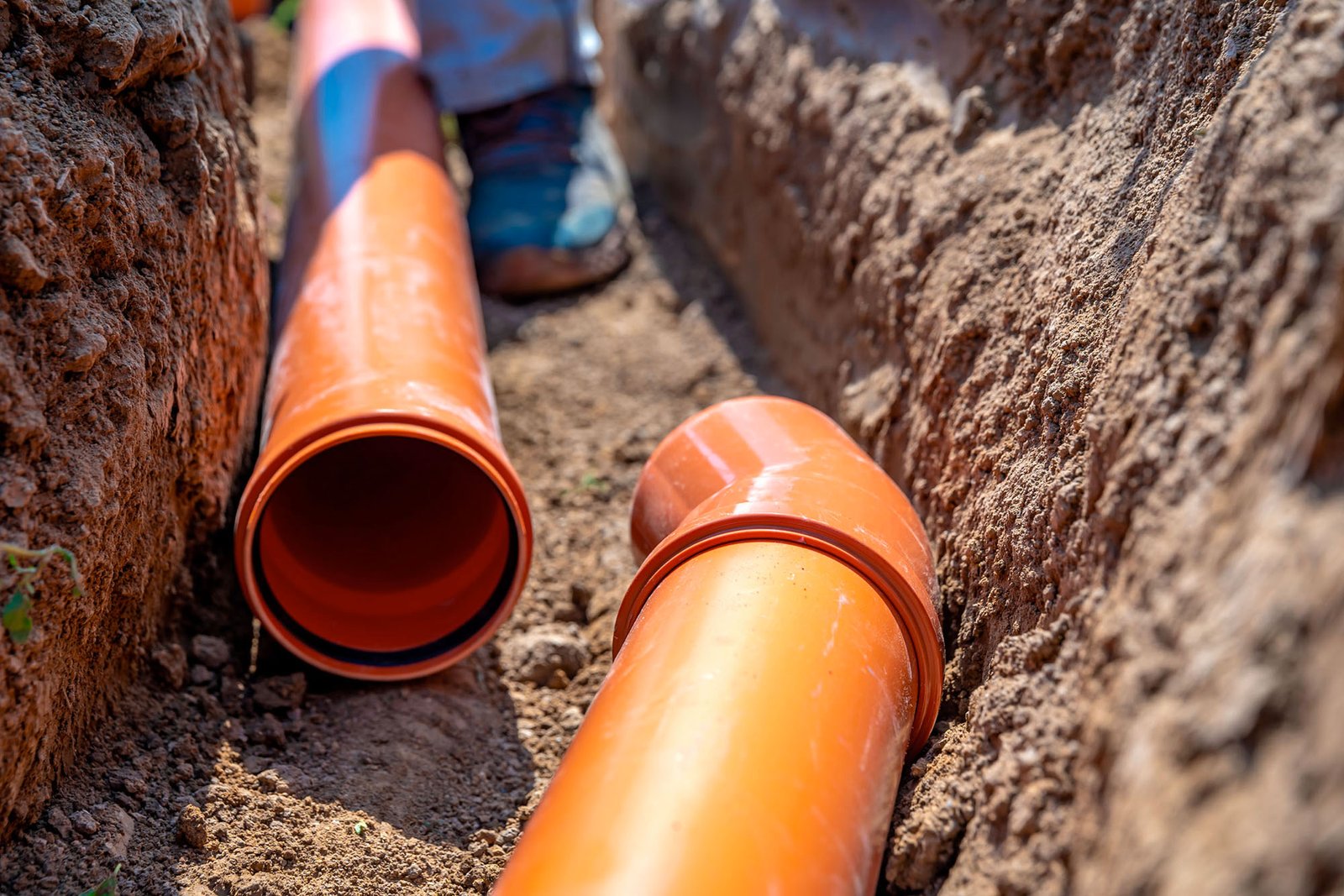
Open-trench replacement. The crew digs a trench from the street connection (the “curb stop”) to your house, removes the old line, lays new pipe — usually copper or PEX — and backfills. It’s the traditional approach: straightforward, works in any soil, but it tears up the yard, driveway, or sidewalk along the route, and restoration adds time and cost.
Trenchless replacement. Pipe-bursting pulls a new line through the old one’s path, fracturing the old pipe outward as it goes — only small entry and exit pits are dug. Our trenchless sewer line repair options page explains the same technology used for sewer lines. Trenchless costs more per foot but often wins on total cost once you skip the landscaping and concrete restoration.
A typical job follows this sequence: locate and mark the line → obtain permits → expose both ends → install the new line → pressure-test → backfill and restore. Most residential jobs take one to two days of active work, plus restoration time for trenching.
What Does It Cost?
Main water line replacement in the Pittsburgh area typically runs $1,500 to $4,000+ for a standard residential run, depending on:
- Length of the run — longer distances from street to house cost more
- Depth and soil — rocky or deep lines need more excavation
- Method — trenchless runs higher per foot but skips restoration costs
- Obstacles — driveways, sidewalks, patios, and mature trees along the route
- Permits and restoration — municipalities charge for permits and street-opening; restoring concrete and landscaping adds up
Always get at least two or three quotes, and make sure each quote specifies the pipe material, method, depth, permit handling, and what’s included for restoration. A quote that’s dramatically cheaper usually left something out.
What to Expect During the Job
Water will be shut off during the active replacement — plan for several hours without water. Know where your main water shut-off valve is before the crew arrives, just in case.
Expect a dug-up yard with the trench method; mark sprinkler lines and invisible fence wiring beforehand so the crew can avoid them.
Permits and inspections are normal — most Pittsburgh-area municipalities require a permit and a final pressure-test inspection before backfill.
After backfill, the ground will settle. Trench lines often need a second grading visit weeks later once the soil compacts.
If water stops suddenly and you suspect the line has already burst, shut the water off at the curb if you can do so safely and call our emergency plumbing in Pittsburgh — a burst main line is an emergency, not a wait-and-see problem. And if you’re still narrowing down whether a hidden leak is the issue at all, start with our leak detection services in Pittsburgh before committing to a replacement.
FAQ
How long does a main water line last?
Galvanized steel lines typically last 40–50 years, copper 50–70 years, and PEX is expected to last 50+ years. If your Pittsburgh home was built before 1980 and still has its original line, plan for replacement rather than waiting for a failure.
Can I repair just the leaking section?
Yes — if the line is otherwise sound and the failure is isolated. But on an aging line, spot repairs often become a yearly ritual; at that point full replacement is cheaper and more reliable.
Who is responsible for the water line — me or the city?
In most Pittsburgh-area municipalities, the homeowner owns the service line from the curb stop (or property line) into the house. The water authority owns the main and the tap up to that point. Check with your local provider if you’re unsure where the responsibility splits.
Does homeowners insurance cover water line replacement?
Standard policies usually exclude gradual wear and corrosion, though sudden accidental damage may be covered. Many insurers now offer inexpensive “service line” endorsements — worth checking before you need one.
Have a Plumbing Problem?
From drain and sewer problems to water heaters, hidden leaks and septic services, get professional help from Man Made Services.